Quick Answer
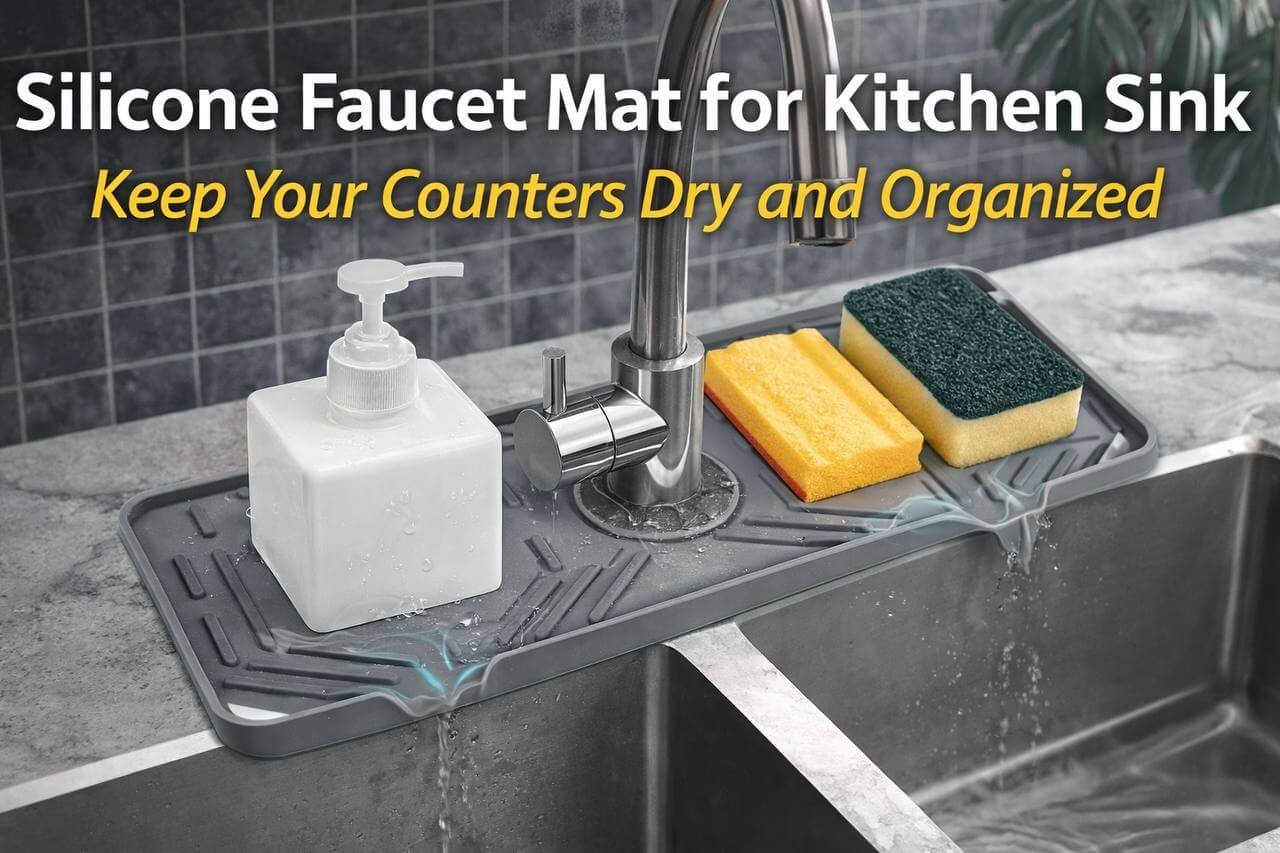
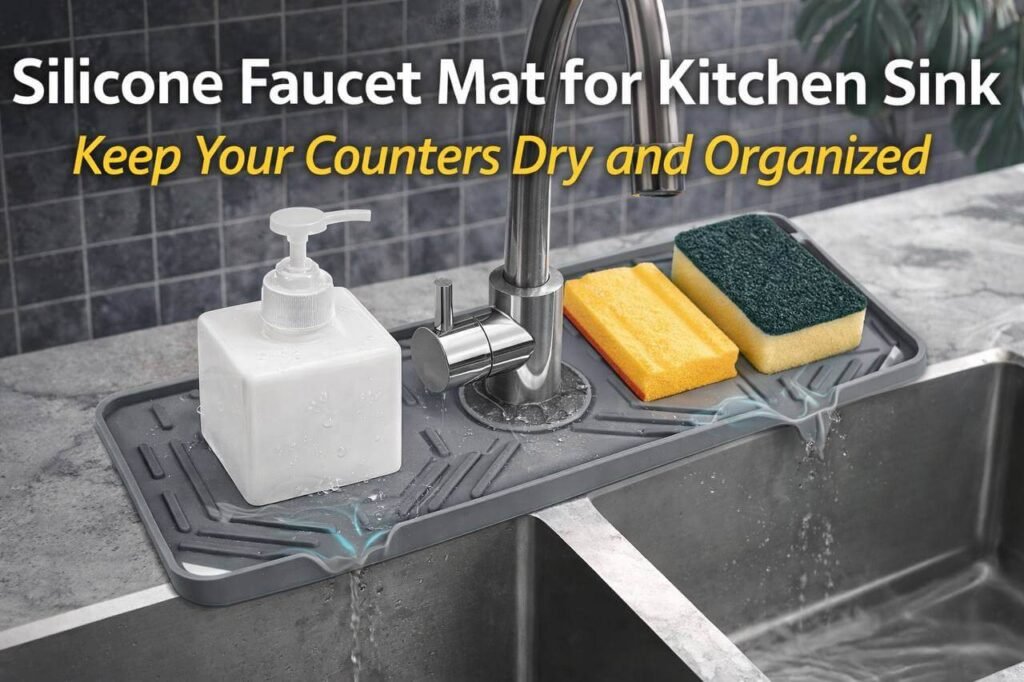
When comparing silicone faucet mat vs sink tray, a silicone faucet mat is usually better for keeping your kitchen counter dry because it directs water back into the sink. Sink trays are better for holding soap and sponges but they do not prevent water from spreading around the faucet area. For most kitchens, a silicone faucet mat is the more practical solution.
Water Drainage & Absorption Performance
When comparing silicone faucet mat vs sink tray, water drainage and absorption performance are key factors in keeping your countertop dry and hygienic. The main difference lies in how each product handles moisture.
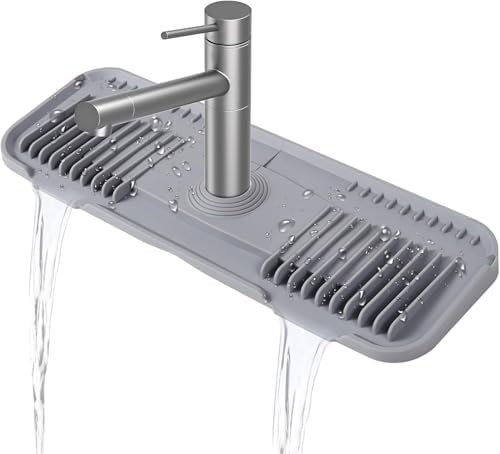
A silicone faucet mat is designed for active drainage. Most models feature a slight slope and built-in channels that guide water directly back into the sink. Because silicone is non-absorbent, it does not retain moisture. This reduces the chance of standing water, mold growth, and water stains around the faucet base.
In contrast, many sink trays focus more on catching water than draining it. Flat or shallow trays may allow water to collect underneath soap bottles or sponges. If not emptied or wiped regularly, this pooled water can create hygiene concerns.
In the silicone faucet mat vs sink tray comparison, silicone mats typically offer more efficient long-term moisture control, especially in busy kitchens where splashing happens frequently.

- —Before Purchasing,Please Measure —
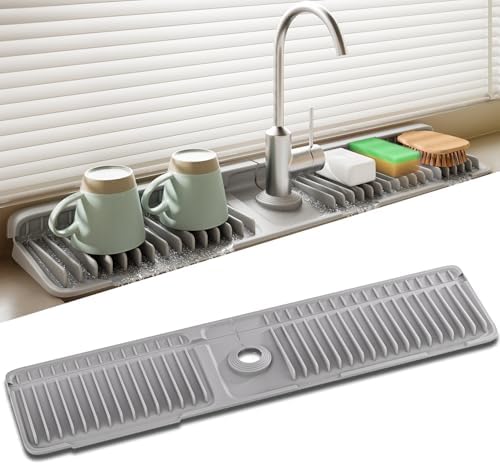
- Upgrade Version-Our new designed for silicone sink splash guard is better than other fabric type on the market.Our fauce…
- Easy to Use-Our sink splash guard behind faucet is made of food-grade silicone.It is reusable and durable, simply instal…
- Keep Your Countertop Dry-Stop wipe the sink countertops after using your faucet!With our faucet guard and draining mat t…
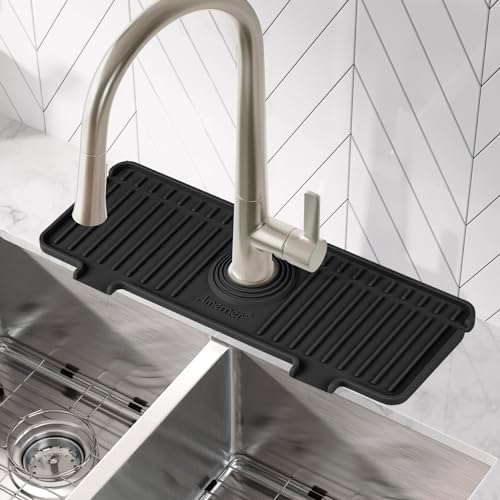
- Product Dimensions-14.6 x 5.7 inches, the diameter of the middle hole is adjustable and fit for the 2.2inch faucet tube.
- Remind Note – Incompatible with the following scene: a.The area of faucet on the countertop is too narrow, or the faucet…
Countertop Protection & Splash Control
When comparing silicone faucet mat vs sink tray, countertop protection is one of the most important factors. The main goal is simple: keep water from spreading around the faucet base and soaking your counter.
A silicone faucet mat is designed to sit tightly around the faucet and slope water back into the sink. Because it fits directly under the faucet handle, it catches splashes at the source. This helps prevent water stains, swelling on wood countertops, and mineral buildup around the base.
A sink tray, on the other hand, usually sits flat behind or beside the faucet. While it can hold soap and sponges, it does not always control splashes effectively. Water may collect underneath or around the tray, especially if it lacks drainage.
If your priority is long-term countertop protection, especially for quartz, laminate, or wood surfaces, the silicone option typically provides better splash control.
Ease of Cleaning & Maintenance
When comparing silicone faucet mat vs sink tray, ease of cleaning is a key factor for daily convenience. A product that saves time and prevents buildup will always be the better long-term choice.
A silicone faucet mat is typically made from non-porous, waterproof material. It can be quickly rinsed under running water or wiped clean with a cloth. Because most designs include a sloped surface, water drains back into the sink instead of sitting on top. This reduces soap residue, mineral deposits, and mold risk. Maintenance is simple and usually takes less than a minute.
A sink tray, especially flat or plastic versions, may trap water underneath or inside corners. If water pools regularly, it can lead to odor, stains, or mildew. These trays often require more frequent deep cleaning and drying to stay hygienic.
In the silicone faucet mat vs sink tray comparison, silicone options usually win in terms of low maintenance and faster cleaning.
Installation, Fit & Sink Compatibility
In the silicone faucet mat vs sink tray comparison, installation and compatibility directly affect performance. A product that does not fit properly can allow water to seep underneath, defeating its main purpose.
Silicone Faucet Mat Fit
Most silicone faucet mats are designed with a flexible center opening that slides around standard single-hole and deck-mounted faucets. Because silicone is soft and adaptable, it molds slightly to the faucet base and sink surface. This tight contact improves splash control and reduces water leakage. Installation typically takes seconds—just position it around the faucet and adjust for alignment.
For best results, measure the diameter of your faucet base and the available space behind your sink before purchasing.
Sink Tray Placement
Sink trays usually sit behind the faucet rather than around it. While easy to place, rigid trays may not conform to curved sinks or larger faucet bases. Small gaps can allow water to escape onto the countertop.
In the silicone faucet mat vs sink tray decision, buyers who want a tighter seal and better compatibility with different sink styles often prefer the silicone option for reliable daily use.
Organization & Space Efficiency
When evaluating silicone faucet mat vs sink tray, organization and space efficiency can influence daily kitchen workflow. The area behind the faucet is often small, yet it tends to collect soap bottles, sponges, and random items. Choosing the right solution helps reduce clutter while keeping the space functional.
Silicone Faucet Mat: Minimalist & Low-Profile
A silicone faucet mat is typically slim and designed primarily for water control rather than storage. Its low-profile shape keeps the sink area visually clean and unobstructed. This makes it ideal for small kitchens, apartment sinks, or narrow countertops where every inch matters.
If your priority is a clean, open look with fewer items around the faucet, the silicone option offers better space efficiency.
Sink Tray: Built-In Storage Function
In the silicone faucet mat vs sink tray comparison, sink trays often provide more storage. Many models are wide enough to hold soap dispensers, brushes, or sponges in one organized spot. This can reduce countertop clutter, but it may also take up more space.
For buyers who want integrated storage, a tray can be practical. For tighter spaces, a silicone mat maintains a cleaner footprint.
Durability & Material Quality
In the silicone faucet mat vs sink tray comparison, durability directly impacts long-term value. A product that warps, cracks, or stains quickly will cost more over time, even if the initial price is low.
Silicone Faucet Mat: Flexible & Water-Resistant
High-quality silicone faucet mats are made from thick, food-grade or BPA-free silicone. This material is flexible, heat-resistant, and non-porous. It does not rust, chip, or absorb moisture, making it ideal for daily exposure to water and soap. Because silicone bends without breaking, it maintains its shape even after repeated cleaning and repositioning.
Sink Tray: Rigid but Varies by Material
Sink trays are often made from plastic, stainless steel, or coated metal. Plastic trays may warp over time, especially with heat exposure. Metal trays can rust if the coating wears off. While some premium models are durable, material quality varies widely.
In the silicone faucet mat vs sink tray decision, buyers seeking long-term durability with minimal maintenance often prefer silicone for consistent performance and resistance to wear.
Design & Kitchen Appearance
In the silicone faucet mat vs sink tray comparison, design is not just about looks—it influences how clean, modern, and organized your sink area feels every day. Since the faucet area is highly visible, even a small accessory can affect the overall aesthetic of your kitchen.
Silicone Faucet Mat: Minimal & Streamlined
Silicone faucet mats are typically slim, low-profile, and available in neutral colors like gray, black, or beige. Because they sit directly around the faucet base, they blend into the countertop and create a seamless appearance. This makes them ideal for modern kitchens, minimalist setups, and smaller spaces where visual clutter stands out.
Sink Tray: Functional but More Visible
Sink trays often appear bulkier since they are designed to hold soap dispensers and sponges. While this can look organized, it may also make the sink area feel more crowded, especially on compact countertops.
In the silicone faucet mat vs sink tray decision, buyers who prioritize a sleek, understated look often prefer silicone, while those who value visible storage may lean toward trays.

Price & Value for Money
In the silicone faucet mat vs sink tray comparison, price alone does not determine value. What matters is how well the product performs over time and whether it reduces maintenance, protects your countertop, and improves daily convenience.
Silicone Faucet Mat: Low Cost, High Practical Return
Most silicone faucet mats are affordable and fall into a budget-friendly range. Despite the low price, high-quality silicone offers strong durability, water resistance, and long-term protection. Because it helps prevent water damage and mineral stains, it can potentially save money on countertop repairs or deep cleaning products.
Sink Tray: Added Storage but Variable Longevity
Sink trays may cost slightly more, especially metal or premium models. While they provide storage benefits, cheaper plastic versions may warp or discolor over time, reducing long-term value.
In the silicone faucet mat vs sink tray decision, buyers should consider durability, maintenance needs, and countertop protection—not just upfront cost. A slightly higher initial investment in quality often delivers better overall value.
Pros and Cons of Each Option
When making a final decision in the silicone faucet mat vs sink tray comparison, a clear breakdown of strengths and weaknesses helps eliminate hesitation and guide confident purchasing.
Silicone Faucet Mat
Pros:
• Sloped design improves automatic water drainage
• Non-absorbent material reduces mold and odor risk
• Slim profile keeps the sink area visually clean
• Easy to rinse and maintain
Cons:
• Limited built-in storage space
• Must match faucet size for proper fit
Silicone mats are ideal for buyers focused on countertop protection and low maintenance.
Sink Tray
Pros:
• Provides organized storage for soap and sponges
• Simple drop-in installation
• Often wider surface area
Cons:
• May allow water pooling
• Requires more frequent cleaning
• Bulkier appearance
In the silicone faucet mat vs sink tray decision, choose silicone for water control and durability, or a tray if storage is your top priority.

Final Verdict: Which Is Better for Your Kitchen?
After comparing performance, durability, design, and value, the decision in the silicone faucet mat vs sink tray debate comes down to your primary goal.
If your top priority is keeping the countertop dry, reducing mold risk, and minimizing maintenance, a silicone faucet mat is typically the better long-term choice. Its sloped drainage design and non-absorbent material actively prevent standing water. For busy kitchens, families, or anyone tired of wiping around the faucet daily, this option delivers consistent results.
If you prefer built-in storage for soap and sponges and don’t mind occasional cleaning, a sink tray may suit your needs. It helps organize items but may require more maintenance to prevent water buildup.
For most homeowners focused on cleanliness and protection, the silicone solution offers stronger overall performance.
According to cleaning experts at Good Housekeeping
FAQ
What is a silicone faucet mat?
Do sink trays prevent water spills?
Which option is better for small kitchens?
Silicone Faucet Mat vs Sink Tray: Which Keeps Counters Dry Better in 2026?

Silicone faucet mat vs sink tray comparison. Discover which option keeps your kitchen counter dry, clean, and organized.
Product Brand: Amazon
Product In-Stock: InStock
4.7